Bosson and Kelsos combine for a special win
Dennis Ryan - Raceform • February 12th, 2026 2:51 PM
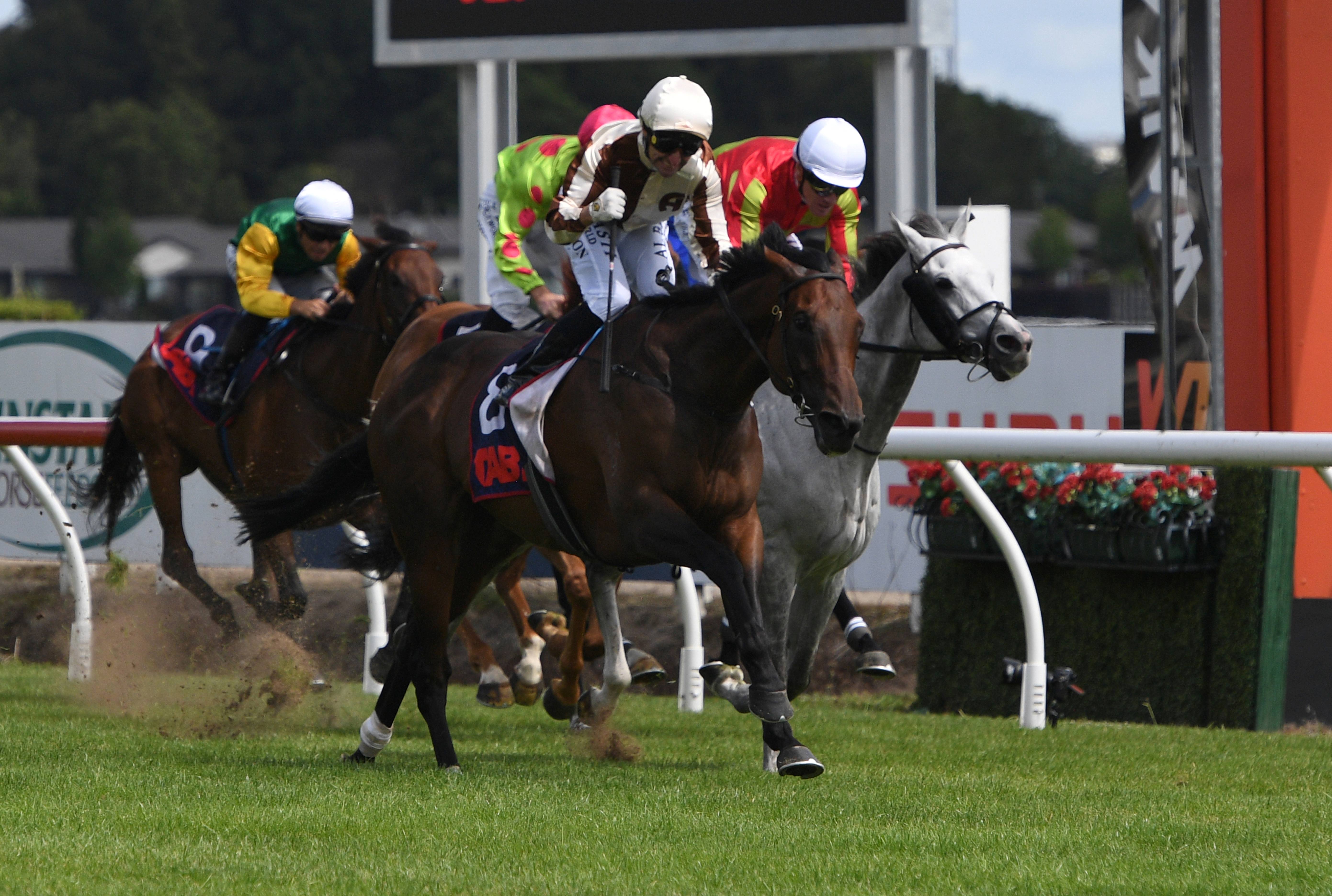
Milestones in racing are many, but few could match what Opie Bosson achieved at Te Rapa last Saturday, nor for that matter the part played by two veterans of training ranks, Ken and Bev Kelso.
The trio combined to win the $700,000 Herbie Dyke Stakes with Legarto, taking Bosson to a first ever century of Group Ones by a New Zealand-based jockey, and the Kelsos to 15, a remarkable achievement in itself given the small numbers they have trained over the years.
With a national jockeys’ premiership in just his second full season and a first Group One win at age 17, Bosson’s 30-year career has marked him as one of the very best to don silks. His 100 Group Ones have included 16 in Australia and all of that against a background of major career setbacks, particularly in his continual battle with weight.
Bosson’s extreme talent has ensured a strong support network over the years, from his first mentor Stephen Autridge, to Te Akau Racing principal David Ellis and his trainers, in particular Mark Walker. Te Akau also features in the list of horses that have been integral to his career, dating back to the likes of early stars Distinctly Secret, Darci Brahma and King’s Chapel, to Melody Belle, on whom he broke boyhood idol Lance O’Sullivan’s 63-win Group One record, and the one he rates the very best, Imperatriz, the means to nine elite races, six of those in Australia.
Bosson has spread his talent across other stables, in particular combining with New Zealand’s most successful transtasman Group One winner Murray Baker, who provided him with a career-high Caulfield Cup on Mongolian Khan.
Reflecting on his career, Bosson describes Stephen Autridge as his ‘rock’, something that the man who has been a lifetime presence as his godfather as well as his initial guiding hand elaborates on.
“You could say Opie and I have been together since he was born,” Autridge commented. “He’s like a son to me and I’ve been proud of him for a long time. Maybe he hasn’t made it easy for himself at times, but to make it to the century tells you what a class act he is and how determined he has been to get there.”
Bosson, who was inducted to the New Zealand Racing Hall of Fame in 2023, prefers his actions to speak louder than words, as illustrated by referring to his Group One century as “a pretty cool achievement”. He admits that when he returned from his most recent ‘retirement’, his biggest driver was to ride the final Group One winner required to complete the century.
Now he has a further incentive, with five more to take him past this country’s second most successful elite jockey, Jim Cassidy, on 104, and while he hasn’t set his sights on the ultimate Kiwi jockey benchmark, James McDonald, he retains the drive to compete.
“I’m no chance to catch James but I still feel good and I think I’m riding as well as I ever have,” Bosson said after Legarto had led a winning treble at Te Rapa last weekend.
Veteran trainers Ken and Bev Kelso have provided the Hall of Fame jockey with just a handful of wins, but they were perfectly positioned after he had combined with Legarto to make their own observations.
“We’ve known Opie since he came to Matamata as a kid and he’s always been a classy rider,” says Ken Kelso. “He hasn’t ridden many for us, but he has been a big help to us with trackwork and it meant a lot to us that we were able to give him his 100th Group One.
“Legarto has had her share of setbacks over the past couple of years and just lately it had been quite frustrating, seeing her run good races but not quite getting there.
“We had never lost faith in her and engaging Opie, then for him to ride such a smart race and get the win, was a massive thrill for both of us.”
Saturday was an emotional occasion too, as shown by Kelso in his post-race interview, and also for his wife, whose health over the past 18 months has confined her to home, interspersed with trips to hospital.
“I’ve done it very hard since breaking my hip 18 months ago and my health not being the best has kept me from the track and the races,” Bev Kelso recounted. “Sitting at home by myself and watching Legarto win like that, I couldn’t see the screen at one stage because of the tears!”
While their tally of 15 Group One wins pales somewhat against Bosson’s century, it is still highly commendable for a couple who became trainers with no direct connection to racing and have never dealt with more than 20 horses, most often around a dozen, at any time.
“Looking at our figures over the years, our average number would be more like 10,” added Ken, who has kept meticulous records since their first win when still based in Tauranga in the late 1970s.
Until then they had concentrated on showjumping, and it was only when they took on a couple of thoroughbreds for pre-training that they realised there might be a future in racing.
“Through showjumping I was friends with Ann Gibbs when she was still living in Rotorua and long before she married Jim,” Bev recalls. “Jim Marks and Colin Thompson did the vet work on our showjumpers and through them we got Bermadez and Dancing Queen to pre-train, one of them trained by Dave O’Sullivan and the other by Gibbsy.
“It didn’t take me long to work out you got paid for working racehorses but not for riding showjumpers, so I guess it went from there.
“Kevin Old was training a horse for Ann and her parents and when he figured it would be a good idea to give the horse a change of scenery, that led to him suggesting I get my licence. Back then you had to provide three references with your licence application, and I got a decent leg up when Dave, Gibbsy and Eric Ropiha, who we knew through showjumping, agreed to be my referees.”
Success quickly followed when that first racehorse, Fortune’s Fancy, was a winner. Then when Old decided to relocate to Melbourne, he suggested to Bay of Plenty clients Alister Bannan and Rose McGee that they give the tyro trainer a chance with their pair of developing stayers Bold Fripon and Royal Fripon.
That coincided with a crucial decision to take a definitive stake in racing by moving to Matamata, where retired trainer Terry Alcock had put his Banks Road stable on the market and the budding trainers took the plunge.
“We had got to know Jim Gibbs quite well by this stage and he advised us that if we wanted to get serious about training, we needed to base ourselves at a major training centre,” says Ken.
“Jim’s reasoning was that would give us the best chance to observe other trainers and it’s exactly how it worked out, and most of all we found those trainers to be very helpful in the advice they were happy to give us.
“Training alongside people like DJ (O’Sullivan) and Gibbsy, as well as others who knew what they were doing, was a great way to get started.”
Bold Fripon and Royal Fripon also provided a healthy launch pad, the former the first stakes winner in Bev’s name when he won the 1980 Marton Cup at Awapuni, and the latter a course specialist at their old track, Tauranga, where he won six races before unfortunately bowing a tendon.
As the wins mounted, so did the quality of their stable, and the Group One breakthrough came with Love Dance in the 1996 Avondale Gold Cup, followed by another by the Kaapstad mare in the following year’s Kelt Capital Stakes.
Envoy was next to reach the highest level with his 2006 Wellington Cup win, three months after he had carried the Kelso colours to a proud seventh place behind Makybe Diva in her third Melbourne Cup win.
Envoy is in fact the only male galloper to have won a Group One for the Kelsos, the remainder all fillies or mares: Xanadu, Bounding, Perfect Fit, Levante and Legarto. The last two, both by Proisir and racing for partnerships headed by Philp and Catherine Brown of Ancroft Stud, have been the most prolific with four elite wins apiece.
Legarto holds an elite place through her Australian Guineas win at Flemington three years ago, while Love Dance (AJC Oaks), Envoy (Adelaide Cup) and Alabama Lass (Moir Stakes) each finished second at that level across the Tasman.
“Winning with Legarto at Te Rapa was special for all sorts of reasons,” says Ken. “With Bev’s health it’s been difficult managing everything, but despite all that she has remained involved and it meant a lot for both of us to see her bounce back like that.”
CLICK HERE to subscribe to RaceForm and get your copy delivered each week.
Big Saturday includes meetings at Matamata and Ascot Park. Race highlights are the Matamata Breeders Stakes and the Matamata Slipper. Tune in on Trackside 1 or trackside.co.nz from 11:30am